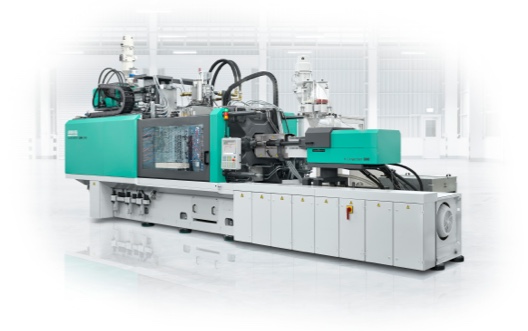

If you’re a production manager or a buyer of plastic injection molding machinery, you already know the feeling: a great deal appears, the specs look promising… and then the doubt hits. “Is this second-hand injection unit going to perform like a champ, or will it become the most expensive paperweight in the factory?”
I’m going to walk you through a practical, no-nonsense checklist to verify condition, performance, and technical specs—so you can buy with confidence and keep your production schedules intact.
Why a Second-Hand Injection Unit Can Be a Brilliant Move
Let’s start with the good news: a second-hand injection unit can be a smart investment. The right unit gives you solid performance at a lower cost, faster availability, and often a great ROI—especially when it’s properly inspected, serviced, and set up before delivery.
At UDO KRICHBAUM TRANSITUS, we live and breathe used and reconditioned industrial machinery for plastics processing and injection molding. I’ve seen plenty of machines that, with proper revision and tuning, deliver excellent results for years. The key is simple: don’t buy “blind.” Buy “verified.”
The Real Goal: Reduce Risk Before You Commit
When I evaluate a second-hand injection unit, I focus on three big questions:
- Can it meet my process requirements? (shot size, pressure, plastics, cycle time)
- Is it mechanically healthy? (wear, leakage, screw/barrel condition)
- Can I prove it with evidence? (maintenance history, test reports, documentation)
If you can answer those with real data—not “trust me, it’s fine”—you’re already ahead of the game.
1) Verify Technical Specifications (Because “It Looks Similar” Is Not a Spec)
Before you fall in love with a price tag, I recommend validating the injection unit specifications against your production needs. For a second-hand injection unit, always request or confirm:
- Screw diameter (and available screw options, if any)
- Max injection pressure and hydraulic/servo capability
- Shot volume / shot weight (based on your polymer)
- Plasticizing capacity (kg/h) for your typical materials
- L/D ratio and screw design suitability (general purpose vs. specific polymers)
- Nozzle type, heater bands, thermocouples, and compatibility
- Drive type (hydraulic, hybrid, electric) and control integration
My rule: if the seller can’t provide a clear technical sheet, the unit may still be good—but the risk goes up. You’ll want to compensate with stronger testing and inspection.
2) Request the Maintenance History (The Injection Unit’s “Medical Records”)
Maintenance records are pure gold. With a second-hand injection unit, I want to see:
- Preventive maintenance schedules (oil, filters, seals, heaters)
- Repairs and replacements (screw, barrel, check ring, valves)
- Past issues: pressure drops, temperature instability, leakage
- Operating hours (if available) and production context
No history doesn’t automatically mean “bad,” but it does mean you should treat the unit like a mystery novel. And in production, surprises are only fun when they happen to someone else.
3) Ask for Function Test Reports (If It Can’t Be Tested, It Can’t Be Trusted)
If there’s one thing I push hard for, it’s proof of operation. A proper function test report for a second-hand injection unit should ideally include:
- Injection pressure stability over repeated cycles
- Temperature control performance across zones (including heat-up time)
- Screw rotation and plasticizing behavior (noise, vibration, consistency)
- Nozzle shut-off / leakage observations
- Repeatability metrics, when possible
Even better: a video of the unit running is helpful, but it’s not a substitute for real measurements. Think of video as “nice,” and test data as “necessary.”
4) Perform a Visual Inspection (Yes, I Judge by Appearances)
Visual inspection won’t tell you everything—but it will reveal plenty of red flags fast. When I look at a second-hand injection unit, I check:
- Oil leaks around hydraulic connections, cylinder area, and valves
- Burn marks near heater bands or wiring (potential overheating issues)
- Corrosion (especially if the machine worked in humid environments)
- Worn cables and connectors (loose sensors = unstable process)
- Damage to guards and covers (often indicates poor handling)
- Signs of “creative repairs” (non-standard bolts, improvised brackets, taped wiring)
I also look for general cleanliness. A machine can be old and still well cared for. But if everything is coated in grime and mystery fluids, chances are maintenance wasn’t exactly a religion.
5) Check Screw, Barrel, and Non-Return Valve Wear (The Heart of the Injection Unit)
This is where quality really lives or dies. Wear on the screw and barrel impacts plasticizing, mixing, shot consistency, and pressure. With a second-hand injection unit, I recommend:
- Measuring screw and barrel wear (when possible) or requesting prior measurements
- Inspecting the non-return valve / check ring for wear (a common culprit of poor repeatability)
- Confirming the screw type matches your materials (filled polymers, abrasive compounds, etc.)
If the unit previously ran glass-filled materials, for example, I become extra cautious. Abrasive materials can accelerate wear dramatically, and that can show up as inconsistent shots and higher scrap rates.
6) Confirm Compatibility With Your Existing Setup (Avoid “Frankenstein Integration”)
Even a fantastic second-hand injection unit can become a headache if it doesn’t integrate well into your production environment. I double-check:
- Electrical requirements (voltage, frequency, power availability)
- Control interface and signals (especially for retrofits or machine pairing)
- Hydraulic compatibility (if applicable)
- Cooling connections and temperature control units
- Nozzle alignment and mechanical fit (when used in special configurations)
Translation: I don’t want your installation to feel like building IKEA furniture without instructions—while the line supervisor watches.
7) Look for Documentation: Manuals, схемas, and Spare Parts Lists
Documentation doesn’t just look nice in a folder. It saves time, prevents mistakes, and reduces downtime. For any second-hand injection unit, I ask for:
- User manuals and maintenance guides
- Electrical diagrams and hydraulic схемas
- Spare parts list and recommended consumables
- Controller documentation (parameters, alarms, service mode)
If you’re buying for a production environment, documentation is part of quality. Period.
8) Insist on Pre-Delivery Inspection and Setup (This Is Where Reconditioned Really Matters)
Here’s the part many buyers underestimate: the difference between “used” and “ready for production” is the work done before the machine arrives.
When we prepare equipment at UDO KRICHBAUM TRANSITUS, the goal is to deliver machinery that has been reviewed and set up to reduce commissioning surprises. For a second-hand injection unit, that typically means checking key functions, addressing obvious wear points, and ensuring it’s in a condition that makes sense for industrial use—not just resale.
If a supplier offers revision and tuning services before delivery, take that seriously. It’s often the most cost-effective insurance you can buy.
Quick “Go/No-Go” Checklist for a Second-Hand Injection Unit
If you’re short on time (and honestly, who isn’t?), here’s my rapid checklist:
- Specs match your process (shot, pressure, plasticizing capacity)
- Maintenance history available or at least credible service information
- Function test report with measurable results
- Visual inspection shows no major leaks, burns, or hacks
- Screw/barrel condition checked or assessed
- Documentation included
- Pre-delivery revision offered or completed
If three or more of those are missing, I slow down and renegotiate—or I walk away. There will always be another machine. There won’t always be another production deadline.
Conclusion: Buy Second-Hand, But Buy Smart
A second-hand injection unit can be a powerful upgrade for your production line—if you approach the purchase like a professional, not like a gambler.
My advice is simple: verify specs, demand evidence, inspect intelligently, and choose partners who understand plastics machinery, not just “selling metal.” If you want support selecting, verifying, or preparing used and reconditioned injection equipment, I’m always in favor of doing things the safe way: with data, tests, and a proper pre-delivery check.
Ready to talk about your application and what kind of second-hand injection unit makes sense for your process? Visit transitus.es and let’s get you equipment that performs—not surprises.